Replacing a Back Boiler: What's Involved and Where the New Boiler Goes
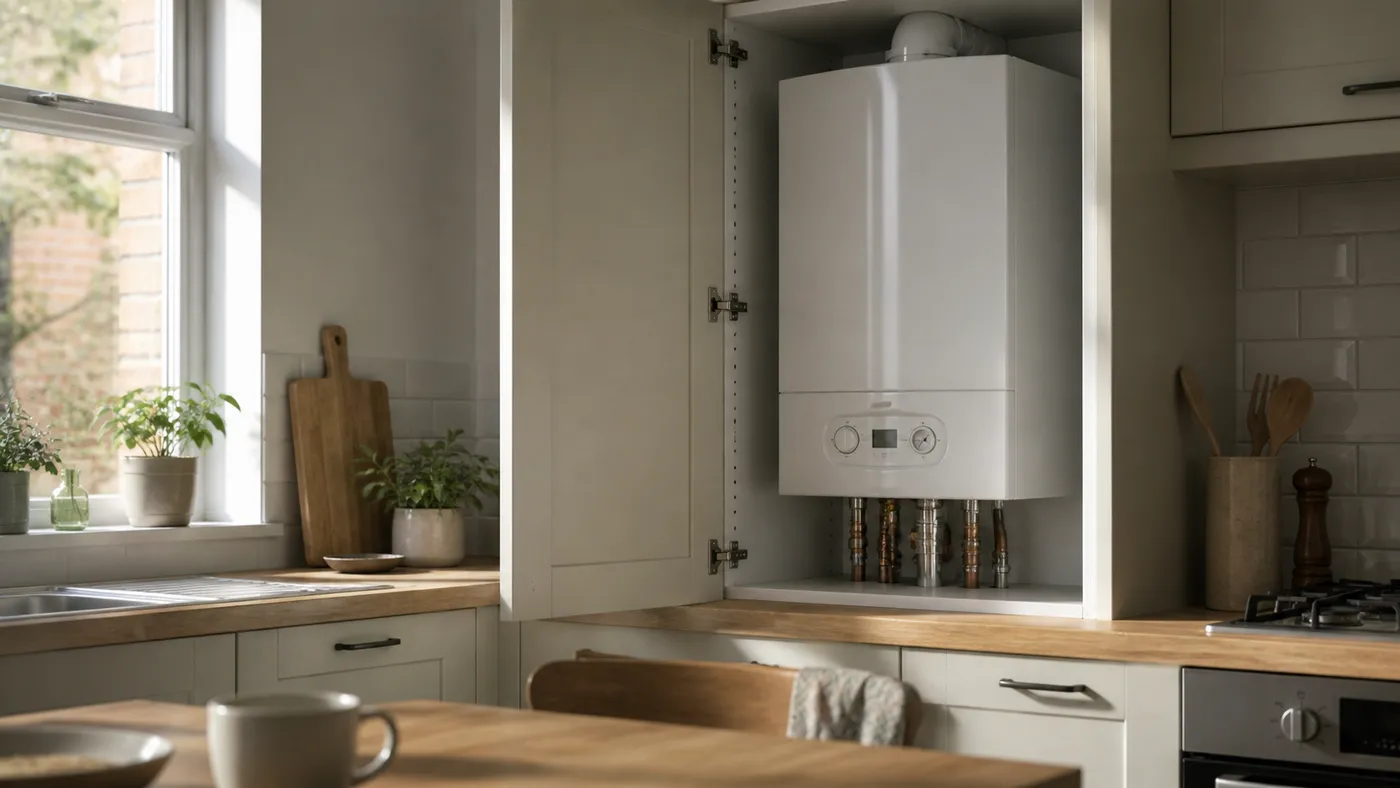
A back boiler sits behind a gas fire in the fireplace, and it cannot simply be swapped for a modern one in the same spot. Here is what replacing one involves and the choices you will need to make.
Replacing a back boiler means removing the boiler and the gas fire in front of it from the fireplace and fitting a modern condensing boiler somewhere else in the house, usually the kitchen, an airing cupboard or the loft. It is a bigger job than a standard boiler swap because the boiler moves, the gas and heating pipework has to be rerouted, and the fireplace has to be made good. The upside is that you are replacing one of the least efficient boiler types still in use.
What a back boiler is and how to spot one
A back boiler is a gas boiler installed inside the fireplace opening, behind a gas fire, and it uses the chimney as its flue. It was a common way to heat homes in the decades after the war, and many are still running in London terraces and semis. If your gas fire has a separate control for the heating and hot water, or there is no boiler anywhere else in the house, you probably have one.
Back boilers are regular (heat-only) boilers. They almost always work with a hot water cylinder in an airing cupboard and a cold water tank in the loft. They are also non-condensing, so they waste much more heat up the chimney than a modern boiler.
Why you cannot fit a new back boiler in the same place
In practice a like-for-like swap is not the answer, because new gas boilers must meet current Building Regulations efficiency standards and the fireplace position rarely suits a modern condensing boiler. A condensing boiler needs a room-sealed flue through an outside wall or the roof, and a condensate pipe to a drain, and neither is easy to provide from a chimney breast in the middle of the house.
The practical choice is not whether the boiler moves, but where it goes. An installer who tells you otherwise should explain exactly how their proposal meets the regulations.
Where the new boiler can go
The best position is usually on an outside wall close to the existing gas supply and heating pipework, because that keeps the flue short and the rerouting simple. Common choices are:
- The kitchen. Often the easiest: an outside wall, a gas supply nearby and a drain for the condensate.
- The airing cupboard. Works well if you are keeping a cylinder and there is room for a system boiler beside it, and a flue route out.
- The loft. Possible, with a fixed ladder, lighting and a boarded walkway for servicing access, and protection for the condensate pipe from frost.
- A utility room or garage. Useful if it has an outside wall and is close enough to the gas meter.
A survey decides this, because the flue route, gas pipe size and distance from the meter all affect what is sensible. Moving your boiler during a renovation covers the same considerations if you are doing other work at the same time.
Combi or system boiler to replace it?
A back boiler replacement is a natural point to change system type, and for many smaller homes a combi is the simpler result. Going to a combi removes the cylinder and the loft tanks, freeing the airing cupboard. It suits homes where one bathroom is in use at a time and the mains flow is good.
Keeping stored hot water with a system boiler suits larger households or homes with two bathrooms in regular use. The old vented cylinder can sometimes be kept, but it is often as old as the back boiler, so replacing it at the same time, possibly with an unvented cylinder, is worth pricing. Combi vs. system vs. regular boilers sets out the trade-offs.
What happens to the fireplace and the gas fire
The back boiler and gas fire come out together, the gas supply to the fireplace is capped or rerouted, and the opening is either closed up or left ready for a new fire. You have three broad options:
- Close it off. The opening is boarded or blocked up and ventilated, and the chimney capped. Plastering and decorating are usually a separate trade.
- Fit a new gas fire. A standalone fire can go back in, subject to the chimney and flue being checked as suitable for it.
- Open it up for another use. Some people restore the fireplace for decoration or a different kind of fire, which is a separate project with its own requirements.
Older back boiler installations can include materials that should only be disturbed with care, and some older fire surrounds and flue components contained asbestos. A careful installer will look at this at the survey rather than on the day of removal.
What the job involves on the day
Expect a back boiler replacement to take longer than a straight swap, typically two or more days rather than one, depending on how far the boiler moves and whether the cylinder and tanks come out. The work normally includes removing the old boiler, fire and redundant pipework, running new gas and heating pipes to the new position, fitting the flue and condensate, cleaning the system, fitting controls and commissioning.
Old systems that ran on a back boiler often carry years of sludge, and a new boiler should not be connected to dirty water. A system clean and a magnetic filter are standard parts of doing the job properly. What happens on installation day covers the stages in more detail.
When to replace it
If your back boiler still works safely and passes its checks, there is no legal requirement to remove it, but planning the replacement before it fails is almost always better. Parts for many back boiler models are now hard to find, so a breakdown can leave you without heating while the new installation is arranged, and the move itself takes longer to plan than a swap.
We survey back boiler replacements before quoting, because every one is different. Book a free survey and we will show you where the new boiler can go, what happens to the fireplace and give you a fixed written quote.
Frequently asked questions
Can a back boiler be replaced with another back boiler?
Rarely in practice. New gas boilers have to meet current Building Regulations efficiency standards, and the fireplace position does not suit the flue and condensate drain a modern condensing boiler needs. The usual answer is a new boiler in a different position.
Do I have to replace my back boiler?
Not if it is working safely. There is no rule that forces removal of a safe back boiler. But parts are becoming hard to source and the appliance is inefficient, so planning a replacement before it fails is usually the better option.
Can I keep my gas fire after removing the back boiler?
The existing fire normally comes out with the back boiler. A new standalone gas fire can often be fitted afterwards if the chimney and flue are checked and suitable for it.