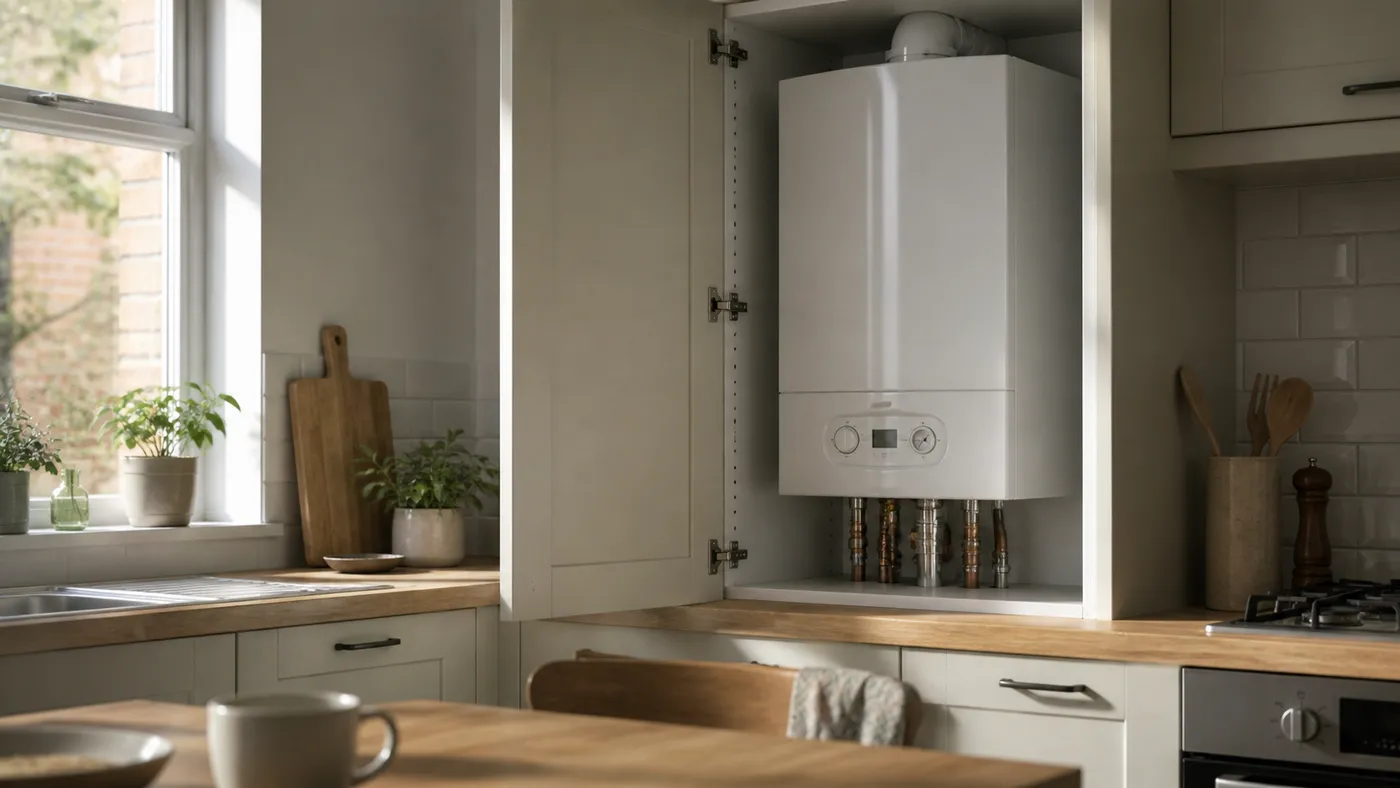
Choosing the wrong size combi boiler is a costly error; here's how to avoid the most common mistakes.
Why Correct Combi Boiler Sizing Matters
Replacing your gas boiler is a significant investment, and getting the size right is crucial for comfort, efficiency, and long-term costs. A boiler that is too small will struggle to heat your home and provide hot water, leaving you cold and frustrated. One that is excessively large will cycle on and off too frequently, wasting energy and increasing wear and tear. The most common errors stem from outdated assumptions about what determines a boiler's required output. For a starting kW figure for your own home, use our boiler size calculator; this article covers the mistakes specific to combis.
The Bedroom Number Trap
A widespread misconception is that the number of bedrooms dictates the boiler size. This is an unreliable guide. A four-bedroom house could have one family bathroom, while a three-bedroom home might have an ensuite, a family bathroom, and a downstairs cloakroom. The demand for hot water, which a combi boiler must produce instantly, is far more closely linked to the number of bathrooms and showers than to sleeping spaces. Sizing based on bedrooms alone often leads to an undersized boiler that cannot cope with simultaneous use.
Bathroom Count: The Key Factor
For a combi boiler, the primary challenge is delivering hot water to multiple outlets at once. The core question is: how many people might need hot water at the same time? If your household routine involves someone showering while another runs a kitchen tap or fills a bath, you need a boiler with sufficient output to meet that peak demand. Ignoring your bathroom count is the fastest route to an undersized system. Always consider your actual hot water usage patterns rather than the property's layout on paper.
Ignoring Your Mains Water Pressure
Your combi boiler's performance is limited by the water pressure coming into your home. Even the most powerful boiler cannot deliver a strong shower if your incoming mains pressure is weak. A common mistake is selecting a high-output boiler without checking if the mains supply can support it. A professional heating engineer will assess your water flow rate and pressure during a survey. This step is essential to ensure your new boiler can perform as expected and that you are not paying for capacity you can never use.
A Simple Sizing Formula
While a professional survey is irreplaceable, you can understand the basic principles with a rough formula used in the industry. A starting point is to allow approximately 1.5kW of boiler output for every radiator in your home. Then, you must add a significant allowance for hot water production, typically around 3kW or more, depending on demand. For example, a home with 10 radiators might start with a 15kW base for heating (10 x 1.5kW). Adding 3kW for basic hot water gives 18kW, but a household with two bathrooms might need a larger hot water component, pointing towards a 24-30kW boiler. This illustrates why bathroom count directly influences the final size.
How to Get It Right
The only way to avoid these mistakes is to get a detailed, in-person assessment from a qualified engineer. Reputable companies operate on a free-survey-then-fixed-quote model. A Gas Safe registered engineer will visit your home, assess your radiator count, bathroom layout, mains pressure, and pipework, and recommend a correctly sized model. They will also complete the Benchmark commissioning checklist upon installation, ensuring the boiler is set up correctly for safety and efficiency. This professional approach protects you from the costly errors of guesswork.
Frequently asked questions
Can't I just replace my old combi with the same model size?
Not necessarily. Your heating needs may have changed if you've added radiators or a bathroom. Older boilers were also often oversized. A new survey ensures the replacement is correctly sized for your current home efficiency and hot water demand.
What happens during the professional boiler survey?
A Gas Safe registered engineer will assess key factors for sizing: they count all radiators, evaluate your bathroom count and hot water usage, test your incoming mains water pressure and flow rate, and inspect your existing pipework. This information is used to specify the correct boiler output.
Is a more powerful boiler always better?
No. An excessively powerful boiler for your needs will operate inefficiently, short-cycling (frequently turning on and off), which increases fuel costs and wear. The goal is to install a boiler that matches your property's specific heat and hot water demand as closely as possible.