Do You Need an Immersion Heater With a New Hot Water Cylinder?
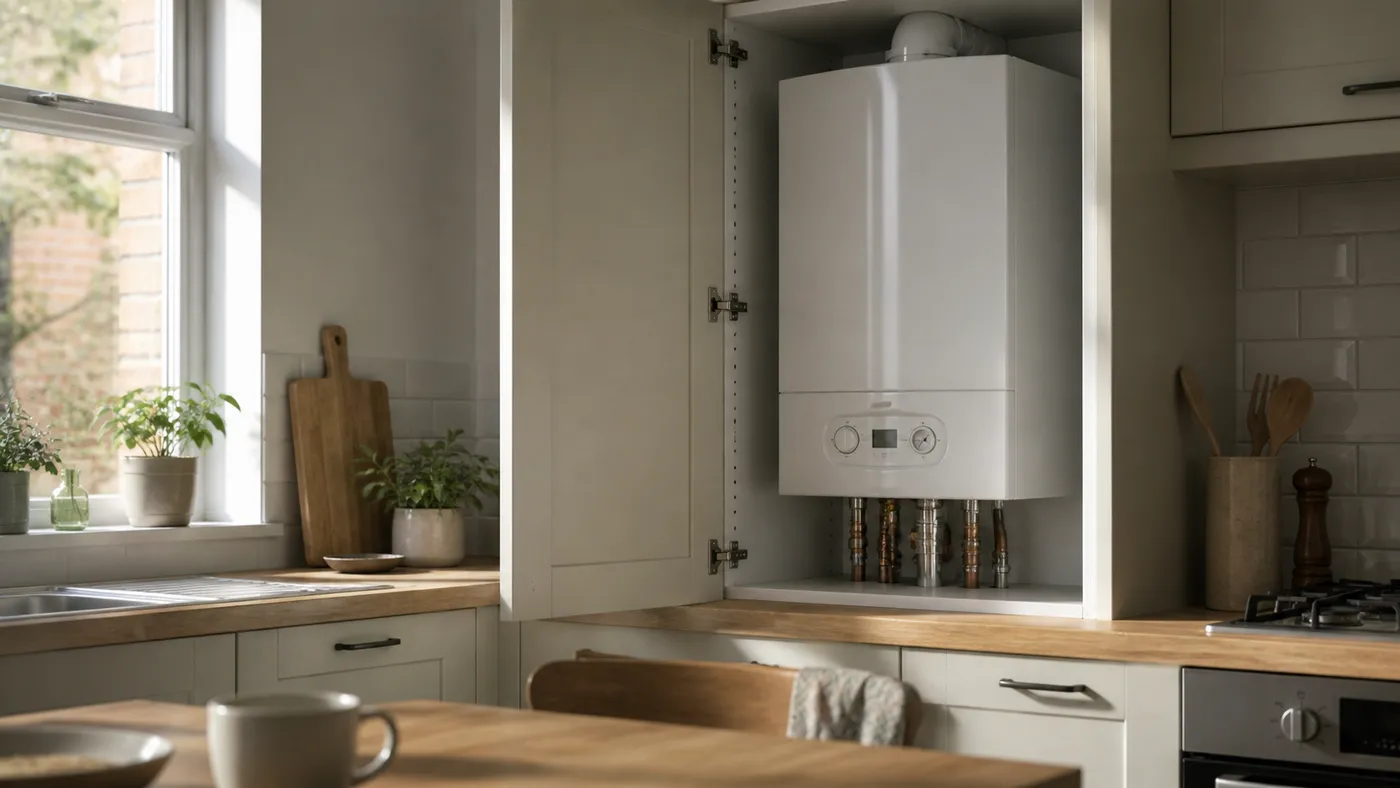
Most replacement cylinders come with an immersion heater fitted, but whether you actually use it is another matter. Here is when an immersion is a useful backup and when it becomes an expensive habit.
You do not strictly need an immersion heater with a new hot water cylinder that is heated by a gas boiler, but most replacement cylinders come with one fitted, and it is worth having. It gives you hot water if the boiler breaks down or is being serviced. Where it becomes essential is with a heat pump, an electric-only home or some solar setups, where the immersion does a job the main heat source cannot.
What an immersion heater does
An immersion heater is an electric element that sits inside the cylinder and heats the stored water directly, like a large kettle element. It has its own thermostat and is switched from a separate switch or timer, usually near the airing cupboard. On a boiler-heated cylinder it works independently of the boiler, which is exactly why it is useful as a backup. That is separate from the cylinder thermostat that tells the boiler when the stored water is hot enough.
When it is worth having with a gas boiler
With a system or regular boiler, the immersion is a backup rather than the main way you heat water. It earns its place in three situations:
- The boiler breaks down. You can still have hot showers while you wait for a repair or a replacement, which is the main advantage of stored hot water over a combi.
- Summer. Some households prefer to heat water occasionally by immersion rather than fire the boiler for a small amount of hot water. Whether this saves anything depends on your tariffs and how you use it. A smart hot water cylinder takes this further by timing heating to cheaper tariff hours.
- Boiler replacement day. If the cylinder stays and only the boiler is changed, a working immersion keeps hot water available while the boiler is disconnected.
If you are choosing between keeping stored hot water and moving to a combi, this backup is one of the practical points in favour of a cylinder. A combi has no cylinder and therefore no immersion, so when a combi fails, hot water stops with it. That is not a reason on its own to keep a cylinder, since a combi is often the better choice for a smaller home, but it is worth weighing if a day without hot water would be a real problem in your household, for example with young children or someone who needs to wash daily for health reasons.
When an immersion heater is essential
An immersion is essential, not optional, when there is no gas boiler to heat the cylinder or the main heat source runs at lower temperatures. The common cases are:
- Heat pumps. A heat pump cylinder normally includes an immersion, which is used for a periodic high-temperature cycle to control bacteria in the stored water and as a top-up.
- Electric-only homes. Flats without gas often rely on immersion heaters on an off-peak tariff to heat the cylinder overnight.
- Solar PV diverters. Some homes with solar panels send surplus electricity to the immersion to heat water during the day.
If any of these apply, the cylinder has to be specified for them from the start. A heat pump cylinder, for example, has a larger coil than a standard one. Heat pump vs. gas boiler explains why the whole system differs.
Single or dual immersion?
A single immersion heats the whole cylinder; a dual arrangement has two elements, one near the top for a quick top-up and one lower down to heat the full volume, usually overnight on a cheaper tariff. Dual immersions make most sense in electric-only homes on an off-peak tariff. For a cylinder heated mainly by a gas boiler, a single immersion as backup is normally enough.
Running costs: gas coil or immersion?
Heating water with an immersion usually costs more than heating it with a gas boiler, because electricity costs more per unit than gas on most UK tariffs. That gap is why the immersion on a gas-heated cylinder works best as a backup rather than the everyday heat source.
The expensive habit is leaving an immersion switched on permanently alongside the boiler. The two then compete to heat the same water, and the electric element often does more of the work than you realise. A timer, or simply switching it off when the boiler is working, avoids that. If you are unsure whether yours is on, look for a lit switch in or near the airing cupboard.
What to check when you replace the cylinder
When you replace a cylinder, confirm what the new one includes rather than assuming. Ask the installer:
- Whether the new cylinder has an immersion fitted, and whether it is single or dual.
- Whether the existing immersion switch, wiring and timer are suitable to reuse, or need updating.
- For an unvented cylinder, that the installer is qualified to fit it. Unvented cylinders need a G3-qualified installer, and the immersion on an unvented cylinder has its own overheat protection as part of the safety design.
- Whether the cylinder is sized for how you actually use hot water; what size hot water cylinder you need explains how that is worked out.
Is a failed immersion a reason to replace the cylinder?
Usually not. A failed immersion element can normally be replaced on its own, and on an otherwise sound cylinder that is the sensible repair. Replacement of the whole cylinder makes sense when the vessel itself is leaking, corroded or too small for the household. A new cylinder is the wrong answer to a dead element on a cylinder that is otherwise in good order, and we will say so if that is what we find. The exception is where the immersion boss, the threaded fitting the element screws into, is itself leaking or corroded on an old copper cylinder, because that often signals the vessel is near the end of its life.
If your cylinder is old and you are weighing up a replacement, hot water cylinder replacement explains how we survey and quote, including the immersion and controls. Book a free survey for a fixed written quote.
Frequently asked questions
Is it cheaper to heat water with an immersion or a gas boiler?
On most UK tariffs, a gas boiler is cheaper because electricity costs more per unit than gas. An immersion on a gas-heated cylinder is best used as a backup rather than the everyday way to heat water.
Should I leave my immersion heater on all the time?
No, not if a gas boiler also heats the cylinder. Leaving the immersion on permanently means the electric element does some of the heating you are already paying the boiler to do. Use a timer or switch it on only when the boiler is off.
Does an unvented cylinder have an immersion heater?
Most do. The immersion on an unvented cylinder has its own thermostat and an overheat cut-out as part of the cylinder's safety design. Work on an unvented cylinder should be carried out by a G3-qualified installer.