Condensing Boiler vs Combi Boiler: What's the Difference?
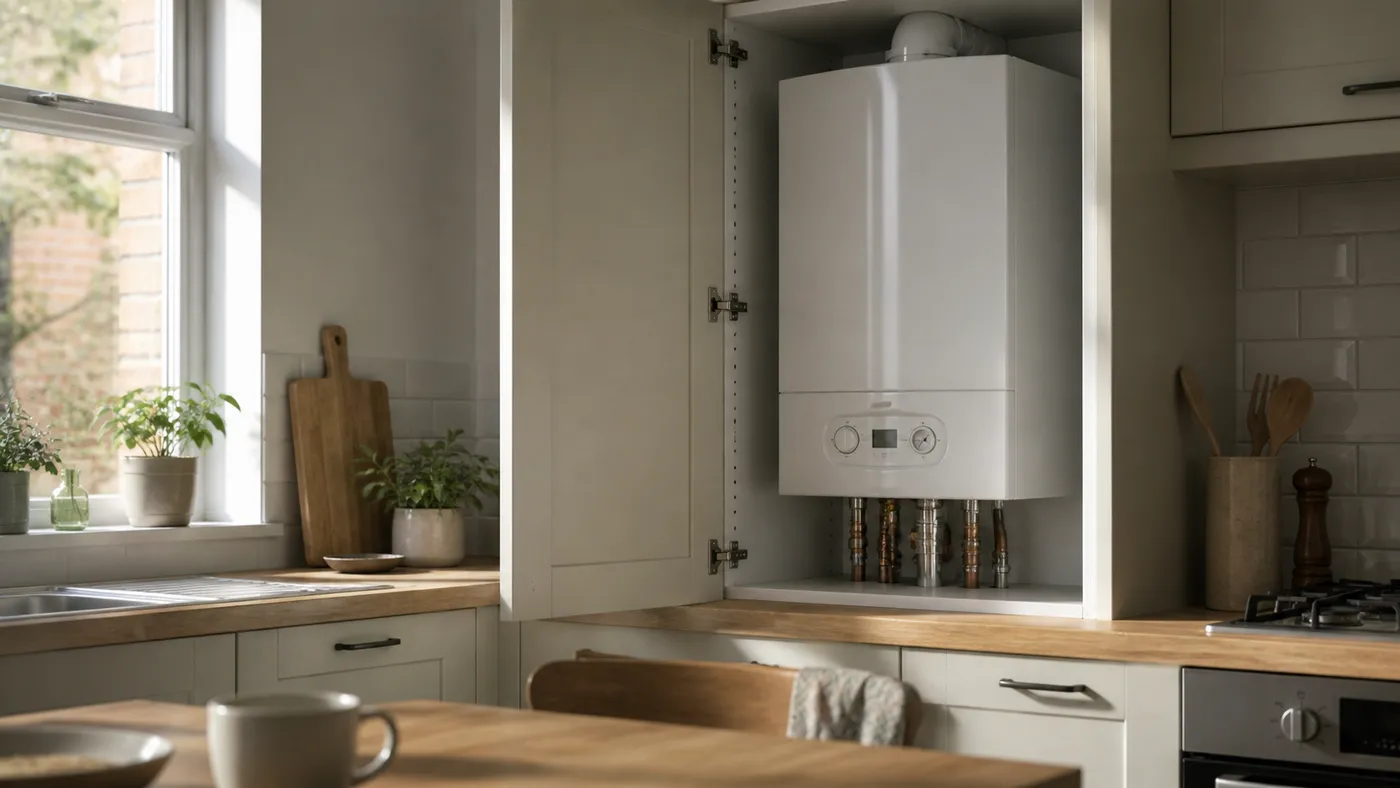
People ask whether to get a condensing boiler or a combi. The honest answer is that almost every new combi is a condensing boiler. Here is why.
A condensing boiler and a combi boiler are not two options to choose between. "Condensing" describes how a boiler gets heat out of the gas it burns, by recovering heat from its own exhaust. "Combi" describes how it provides hot water, on demand from the mains rather than from a stored cylinder. Almost every gas boiler fitted in the UK today is condensing, whether it is a combi, a system or a regular boiler, because Building Regulations in England and Wales have required condensing boilers for new and replacement gas installations since 2005, with only limited exceptions. So the real choice is between a condensing combi, a condensing system boiler and a condensing regular boiler.
What "condensing" actually means
Burning gas produces hot exhaust gases, including a lot of water vapour. An older non-condensing boiler sends those gases straight out of the flue, taking a large share of the heat with them. A condensing boiler passes them over a larger heat exchanger first, cooling them enough for the water vapour to condense back into liquid. Turning vapour back into water releases heat, and the boiler puts that heat into your heating system instead of into the street.
Two visible side effects follow from that. The condensed water has to go somewhere, so every condensing boiler has a condensate pipe running to a drain. And on a cold day you see a white plume at the flue terminal, which is mostly water vapour rather than smoke.
What "combi" means
A combi, or combination, boiler heats your radiators and also heats hot water instantly as it flows from the mains to the tap. There is no hot water cylinder and no tank in the loft. The alternatives are a system boiler, which heats a sealed cylinder, and a regular boiler, which heats a cylinder on an older layout with loft tanks. The guide to what a combi boiler is covers how one works day to day.
How the two ideas fit together
| Boiler type | Hot water from | Condensing? |
|---|---|---|
| Condensing combi | Mains, heated on demand | Yes |
| Condensing system boiler | Cylinder, usually unvented and mains-fed | Yes |
| Condensing regular boiler | Cylinder fed from a loft tank | Yes |
| Old non-condensing boiler | Any of the above | No, and no longer fitted as new in normal circumstances |
If you are replacing a boiler, the question that shapes your home is combi, system or regular, and it is answered by how many bathrooms you use at once, your mains flow rate and the space you have. That decision is set out in the combi, system and regular boiler comparison.
Is your current boiler condensing?
If your boiler was fitted before about 2005, it may well not be. Signs that it is non-condensing include a permanent pilot light you can see through a window on the front, no plastic condensate pipe leading away from the boiler, a metal flue with little or no plume in cold weather, or a back boiler behind a gas fire. A boiler with a white or grey plastic condensate pipe running to a drain, sink waste or soakaway is almost certainly condensing.
An old non-condensing boiler is not dangerous simply because of its age, provided it is serviced and safe. But it will be well past the typical lifespan of a boiler, parts are often hard to get, and replacing it with a correctly sized condensing boiler is one of the more worthwhile upgrades in an older London home. How long boilers last explains when age starts to matter.
Getting the efficiency you paid for
A condensing boiler only condenses when the water returning to it from the radiators is cool enough. If the boiler runs at a high flow temperature all the time, the return water stays hot, condensing barely happens, and a modern boiler behaves more like an old one. What makes the difference in practice:
- Correct sizing. An oversized boiler cycles on and off and spends less time in its efficient range. The boiler sizing guide explains how output should be worked out.
- Sensible flow temperature. Setting the heating flow temperature lower, where the radiators still heat the rooms properly, lets the boiler condense more of the time.
- Good controls. Weather compensation and load compensation adjust the flow temperature automatically. They are among the options under the Boiler Plus rules in England for combi replacements. See whether a smart thermostat is worth it.
- Balanced, clean radiators. A sludged or unbalanced system forces higher temperatures to get rooms warm. A system clean and filter at installation help.
The condensate pipe: the one weakness to plan for
Because a condensing boiler produces water, it needs a condensate pipe to a drain, and an external run can freeze in a hard frost. A frozen condensate pipe backs up and the boiler locks out. A good installation routes the pipe internally where possible, and where it has to run outside, uses a larger diameter and insulation. The detail is in why condensate pipes freeze.
Replacing an old boiler
Whatever type you end up with, the new boiler will be condensing, so the decisions that matter are the type, the output and the quality of the installation. Our new boiler installation survey looks at all three and gives you a fixed written quote. Book a free survey if you are replacing a non-condensing boiler or are not sure what you have.
Frequently asked questions
Are all combi boilers condensing boilers?
All new gas combi boilers sold for UK homes are condensing. Some older combis still in service are non-condensing, but they are no longer fitted as new because Building Regulations require condensing boilers for new and replacement gas installations.
Is a condensing boiler better than a combi?
The question compares two different things. Condensing is how a boiler recovers heat from its exhaust, and combi is how it provides hot water. A new combi is a condensing boiler, as are new system and regular boilers.
How do I know if my boiler is condensing?
Look for a plastic condensate pipe leading from the boiler to a drain or waste pipe, and a white plume from the flue in cold weather. A visible pilot light, no condensate pipe, or a back boiler behind a gas fire usually means a non-condensing boiler.
Why does steam come out of my boiler flue?
On a condensing boiler, the white plume is mostly water vapour in the cooled exhaust, which is normal and more visible on cold days. If you notice smells, soot or a change in how the boiler runs, switch it off and have a Gas Safe engineer look at it.
Do condensing boilers work with old radiators?
Yes. Old radiators work with a condensing boiler, though the boiler condenses more often at lower flow temperatures. In rooms where radiators are small for the space, they may need a higher temperature, which is something a survey can check.