How Many Radiators Can a 28kW Boiler Run? 18kW to 42kW Explained
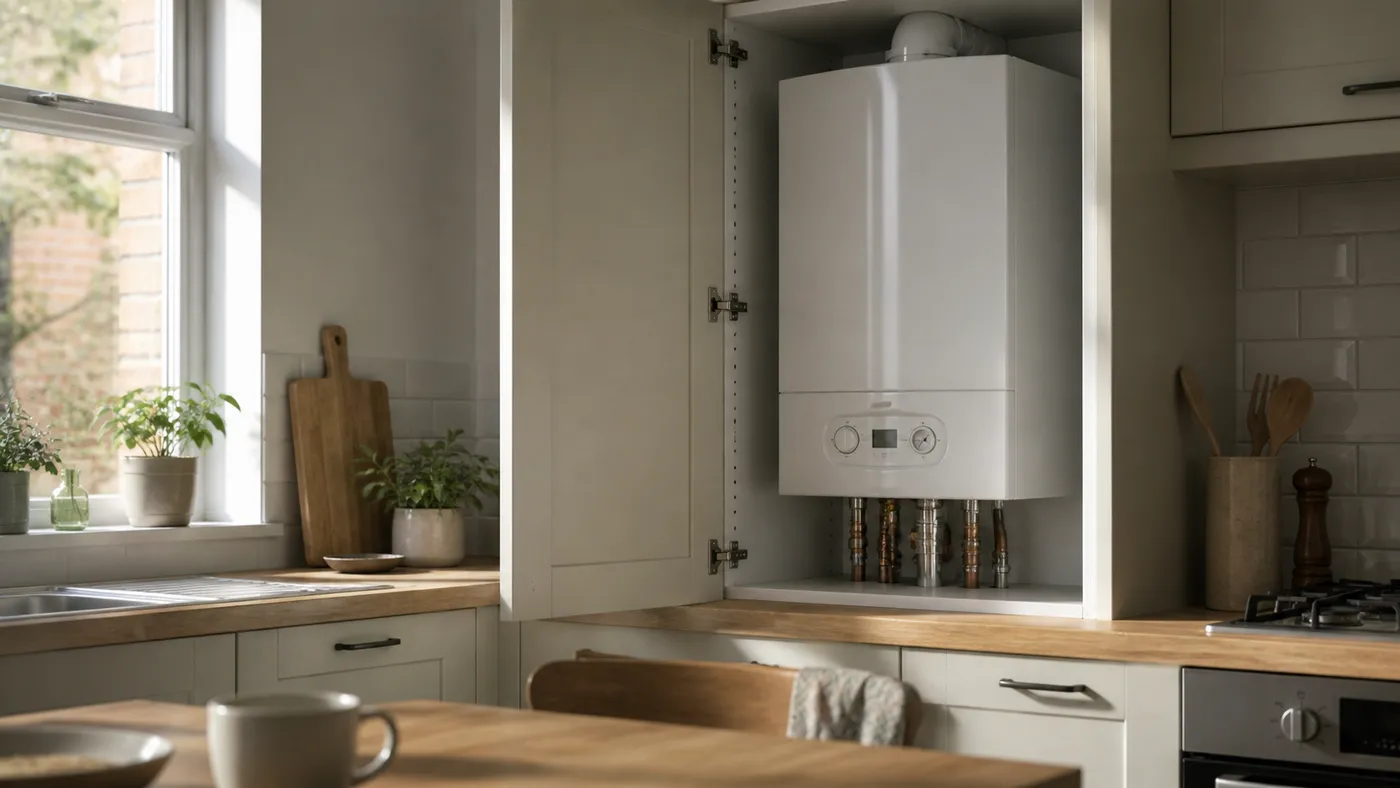
A 28kW combi boiler typically runs around 10 to 15 radiators, a 24kW up to about 10, a 35kW roughly 12 to 16 and an 18kW system boiler around 10 to 12. The rule of thumb: 1.5kW per radiator, plus 3kW for hot water on a combi.
How Boiler Output Relates to Radiator Count
A common question when replacing a gas boiler is whether it can heat all the radiators in your home. The answer depends largely on the boiler's output, measured in kilowatts (kW). While a full heat loss calculation is the only way to be certain, a good starting point is a simple formula used across the UK heating industry.
The Simple Radiator Estimate Formula
As a rule of thumb, you can estimate the required boiler output by allowing roughly 1.5kW for each radiator in your home. For a combi boiler, which also provides instant hot water, you then need to add an allowance for this. A typical allowance for hot water demand on a combi is an extra 3kW.
This gives you a basic formula: (Number of Radiators x 1.5kW) + 3kW = Estimated Boiler Output. This is a preliminary estimate to guide your thinking, not a final specification. The actual size needed for your property can vary based on insulation, room sizes, and window types.
Typical UK Combi Boiler Sizing Bands
Using the rough formula above, common combi boiler outputs in the UK correspond to typical radiator counts. These bands are a useful reference point when considering different models.
24-28kW Combi Boilers
A boiler in this output range is often suitable for a home with up to around 10 radiators. This typically corresponds to a 1-2 bedroom property with one bathroom.
28-30kW Combi Boilers
This band can generally handle a system with between 10 and 15 radiators, making it a common choice for medium-sized homes.
30-35kW Combi Boilers
For homes with approximately 12 to 16 radiators, often those with two bathrooms, a boiler in the 30-35kW range is frequently recommended.
35-42kW Combi Boilers and System Boilers
For larger homes with 16 or more radiators, a high-output combi in the 35-42kW band may be suitable. For properties at this size, it is also worth comparing the benefits of a combi against a system boiler with a hot water cylinder, which can be more efficient for high simultaneous demand.
Getting the Right Size for Your Home
The bands and formula provided here are a starting point. An oversized boiler will cycle on and off too frequently, wasting energy. An undersized boiler will struggle to heat your home. The only way to specify the correct boiler is for a qualified heating engineer to conduct a proper survey of your property.
A reputable installer will follow the industry Benchmark checklist and be Gas Safe registered. They will assess your existing system, consider your hot water usage, and provide a fixed quote after a free survey. This ensures the boiler you choose is correctly sized to handle your radiators efficiently for years to come.
Quick answers by boiler size
| Boiler output | Typical radiator count | Usually suits |
|---|---|---|
| 18kW system or regular | Around 10 to 12 | A smaller home with a hot water cylinder |
| 24kW combi | Up to about 10 | 1 to 2 bedrooms, one bathroom |
| 28kW combi | Around 10 to 15 | A medium-sized home, one main bathroom |
| 30kW combi | Around 10 to 15 | A medium-sized home, one main bathroom |
| 35kW combi | Around 12 to 16 | Often homes with two bathrooms |
| 40 to 42kW combi | 16 or more | Larger homes; worth comparing with a system boiler |
These ranges assume average-sized radiators in a reasonably insulated home. Use them as a sense check, not a specification.
Why a 28kW combi does not put 28kW into your radiators
The headline number on a combi boiler is its hot water output: how much heat it can put into water running to a tap or shower. The central heating output is a separate line on the data sheet and is usually lower. That is why the radiator counts above look cautious next to the 1.5kW formula, and why it is worth reading the heating output figure before comparing two models.
System and regular boilers are rated on heating output alone, because the hot water comes from a cylinder instead of being heated on demand. So an 18kW or 24kW system boiler can often run more radiators than a combi with the same number on the front.
Not all radiators are equal
Counting radiators is a shortcut. A small single-panel radiator under a bathroom window might need a few hundred watts, while a large double-panel radiator in a through-lounge can need well over 1.5kW on its own. Two homes with twelve radiators can need quite different boilers. What actually decides the size is the heat loss of each room: its size, walls, windows and insulation. Solid-walled Victorian and Edwardian terraces with high ceilings, common across London, usually need more output per room than a newer flat of the same floor area.
Adding radiators to your existing boiler
If you are planning an extension or a loft conversion, count the extra rooms before choosing a boiler. A boiler sized tightly for today's radiators may run flat out once two or three more are added, while one far too big for the house short-cycles and wastes gas. Our guide to combi boiler sizing mistakes covers both problems, and if a quote comes back with a bigger boiler than you expected, here is what to ask the installer.
For a starting figure for your own home, try the boiler size calculator, which works from bedrooms, bathrooms and radiators. If you are still deciding on a boiler type, see combi vs. system vs. regular boilers.
Want the size confirmed for your home? A free survey looks at your radiators, hot water demand and mains flow, and ends with a fixed written quote for the right boiler. Book a free survey, or see our combi boiler replacement and system boiler replacement services.
Frequently asked questions
Is the 1.5kW per radiator rule always accurate?
No, it is a rough industry estimate for initial guidance. The actual heat requirement for each radiator depends on the size of the room, the type of radiator, and your home's insulation. A proper heat loss survey by a Gas Safe engineer is essential for accurate sizing.
What happens if my boiler is too small for my radiators?
An undersized boiler will work constantly at maximum output trying to reach the thermostat temperature. It may never heat all your radiators adequately, especially in colder weather, and will lead to higher running costs and potential wear from overuse.
Why is a survey needed if I know how many radiators I have?
A professional survey does more than count radiators. A Gas Safe registered engineer will assess the heat output of your existing radiators, check your pipework, evaluate your property's insulation and hot water needs, and use this information to calculate the precise boiler output required, ensuring efficiency and reliability.
How many radiators can a 24kW boiler run?
A 24kW combi typically runs up to about 10 average-sized radiators, which suits most one or two bedroom homes with one bathroom. A 24kW system or regular boiler is rated on heating output alone, so it can usually run more. Radiator size and the heat loss of the home matter more than the count.
How many radiators can a 30kW combi boiler run?
Usually around 10 to 15 average-sized radiators. Check the central heating output on the data sheet, as a combi's headline figure is its hot water output and the heating output is normally lower.
Is it better to choose a bigger boiler to be safe?
Not really. A boiler that is much larger than the home needs cycles on and off, which wastes gas and adds wear. It is better to size the boiler to the heat loss of the property, with room for any extension you are already planning.