What Are the Different Types of Boiler in the UK?
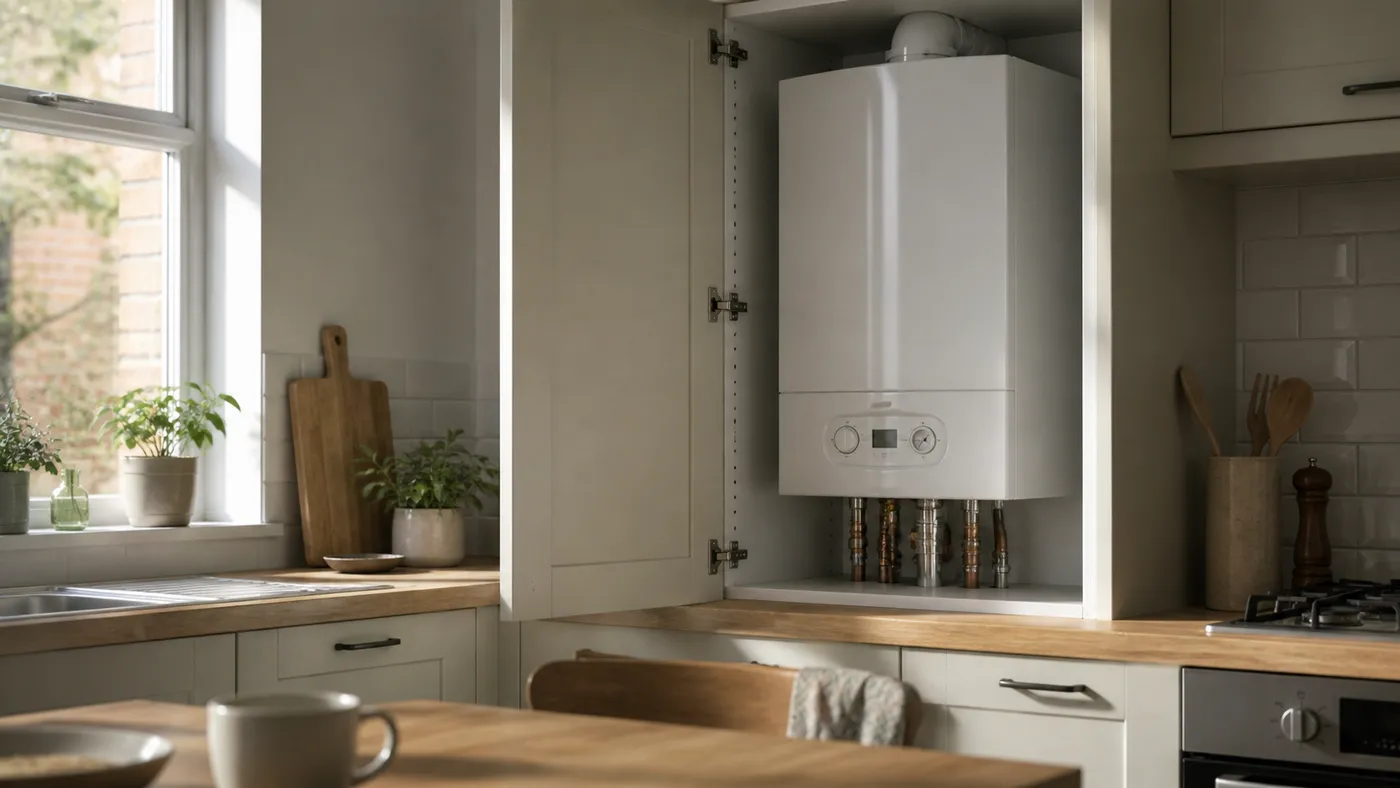
Boilers are sorted by fuel and by layout. For most London homes the real choice is between a gas combi, system or regular boiler; here is when the others come in.
The types of boiler in UK homes are sorted two ways: by the fuel they burn and by how they supply hot water. By fuel, the main types are mains gas, LPG, oil and electric, with heat pumps and hybrid systems as the low-carbon alternatives. By layout, there are three: combi, system and regular (heat-only). Almost every London home with a gas supply is choosing between a gas combi, a gas system boiler and a gas regular boiler; the fuel question mostly matters when there is no gas, or when you are weighing up a heat pump.
Gas boilers: the default in London
A mains gas boiler is the most common type in the UK and, for most London homes, still the lowest-cost boiler to buy and run. Any new gas boiler fitted today is a condensing boiler.
Condensing boilers recover heat from their own exhaust gases, which is why they have a plastic condensate pipe running to a drain and a white plume at the flue on cold days. Building Regulations have required condensing boilers for new and replacement gas installations in England and Wales since 2005, apart from limited exceptions, so the real choice is the layout, not whether the boiler condenses. By law, gas boiler installation must be carried out by a Gas Safe registered engineer, and the installation is notified under Building Regulations.
LPG and oil boilers: for homes off the gas grid
LPG and oil boilers do the same job as a gas boiler but burn fuel stored on site, in a tank or bottles. They exist for properties with no mains gas connection, which is rare inside London.
LPG boilers are close cousins of natural gas boilers and many models can be converted between the two by a qualified engineer. Oil boilers need an oil tank with the right siting and bunding, and are fitted and serviced by OFTEC-registered technicians rather than under Gas Safe. Where a London property has an old oil system and a gas main in the street, switching to gas is often worth pricing; the conversion is a job in its own right, priced after a survey.
Electric boilers: no flue, no gas, higher running costs
An electric boiler heats water with electric elements instead of a flame. It needs no gas supply, no flue and no condensate pipe, so it can go almost anywhere.
That makes electric boilers a real option in flats where a flue cannot be routed, in buildings where gas is not permitted, and in small, well-insulated homes with low heat demand. The drawback is running cost: electricity costs considerably more per unit than gas, and an electric boiler converts it to heat at close to one-for-one, so a larger or draughty home pays heavily for it. Electric boilers also have limited output, which rules them out for bigger houses. The flat-by-flat comparison is in combi boiler vs electric boiler for London flats.
Heat pumps and hybrids: the low-carbon alternatives
A heat pump is not a boiler, but it is the main alternative to one. It moves heat from the outside air or ground into your heating system, and a hybrid pairs a heat pump with a boiler that takes over on the coldest days.
Air source heat pumps can be cheaper to run than direct electric heating because they deliver more heat than the electricity they use. They work best in well-insulated homes with radiators sized for lower flow temperatures and space for a hot water cylinder and an outdoor unit, which rules out some London flats and tight terraces. Grants such as the Boiler Upgrade Scheme can reduce the upfront cost for eligible homes. A hybrid can suit a home that is not ready for a heat pump alone. The head-to-head is covered in heat pump vs gas boiler for a London home.
Combi, system and regular: the three layouts
Whatever the fuel, a boiler is one of three layouts. A combi heats water on demand with no cylinder; a system boiler heats a stored cylinder and has its pump built in; a regular boiler heats a cylinder and relies on tanks in the loft.
- Combi boiler. Heating and instant hot water from one wall-hung unit, no cylinder, no loft tanks. Best for flats and homes with one bathroom and good mains flow. Hot water flow is shared when two taps run at once.
- System boiler. Heats a cylinder, usually an unvented one fed from the mains. The pump and expansion vessel are inside the boiler. Best for homes with two or more bathrooms in use at the same time.
- Regular boiler. Also called heat-only or conventional. Heats a vented cylinder fed from a loft tank, with a separate feed and expansion tank. Still the practical choice in some older homes with weak mains pressure.
This choice has far more effect on daily life than the brand. The full comparison, including which suits which home, is in combi vs system vs regular boilers. Once the type is settled, our guides to which Vaillant boiler to buy and which Worcester Bosch boiler to choose explain how each brand's model ranges differ.
Older types you may be replacing
Some boilers still in London homes are types that are no longer fitted as new. Knowing which one you have tells you how big the replacement job is likely to be.
- Back boilers sit behind a gas fire in the fireplace and heat a vented cylinder. Replacing one means relocating the boiler and often changing the system layout.
- Non-condensing boilers are usually pre-2005, with no condensate pipe and sometimes a visible pilot light. They are generally less efficient than a modern condensing boiler and parts are getting harder to find.
- Open-flued and floor-standing boilers draw combustion air from the room they are in. Modern replacements are room-sealed, which usually means a new flue position.
Which type is right for your home?
For most London homes with a gas supply, the answer is a gas condensing boiler in whichever layout fits your bathrooms, mains flow and space. The fuel question only opens up when there is no gas, when a flue cannot be fitted, or when you want to plan for a heat pump.
A short way to narrow it down: one bathroom and good mains flow points to a gas combi; two or more bathrooms used together points to a system boiler with an unvented cylinder; weak mains pressure with an existing cylinder may point to a regular boiler; no gas and no flue route points to electric; a well-insulated house with outside space may be worth a heat pump survey first. Getting the output right matters as much as the type, which is worked out from the heat loss of the house rather than guessed. A new boiler installation survey checks the gas supply, flue options, mains flow and heat demand, and recommends a type on those measurements rather than on what is easiest to sell.
Frequently asked questions
What is the most common type of boiler in the UK?
The gas condensing combi boiler. It suits most flats and smaller homes with one bathroom and good mains water flow, which is why it is the most widely fitted layout.
Are non-condensing boilers still fitted?
Not as new in normal circumstances. Building Regulations in England and Wales have required condensing boilers for new and replacement gas installations since 2005, with limited exceptions.
Is an electric boiler cheaper than a gas boiler?
Usually cheaper and simpler to install, because it needs no gas supply or flue, but more expensive to run, because electricity costs more per unit than gas. It makes most sense in small, well-insulated flats where a gas boiler cannot be fitted.