Do You Need to Move the Gas Meter for a New Boiler?
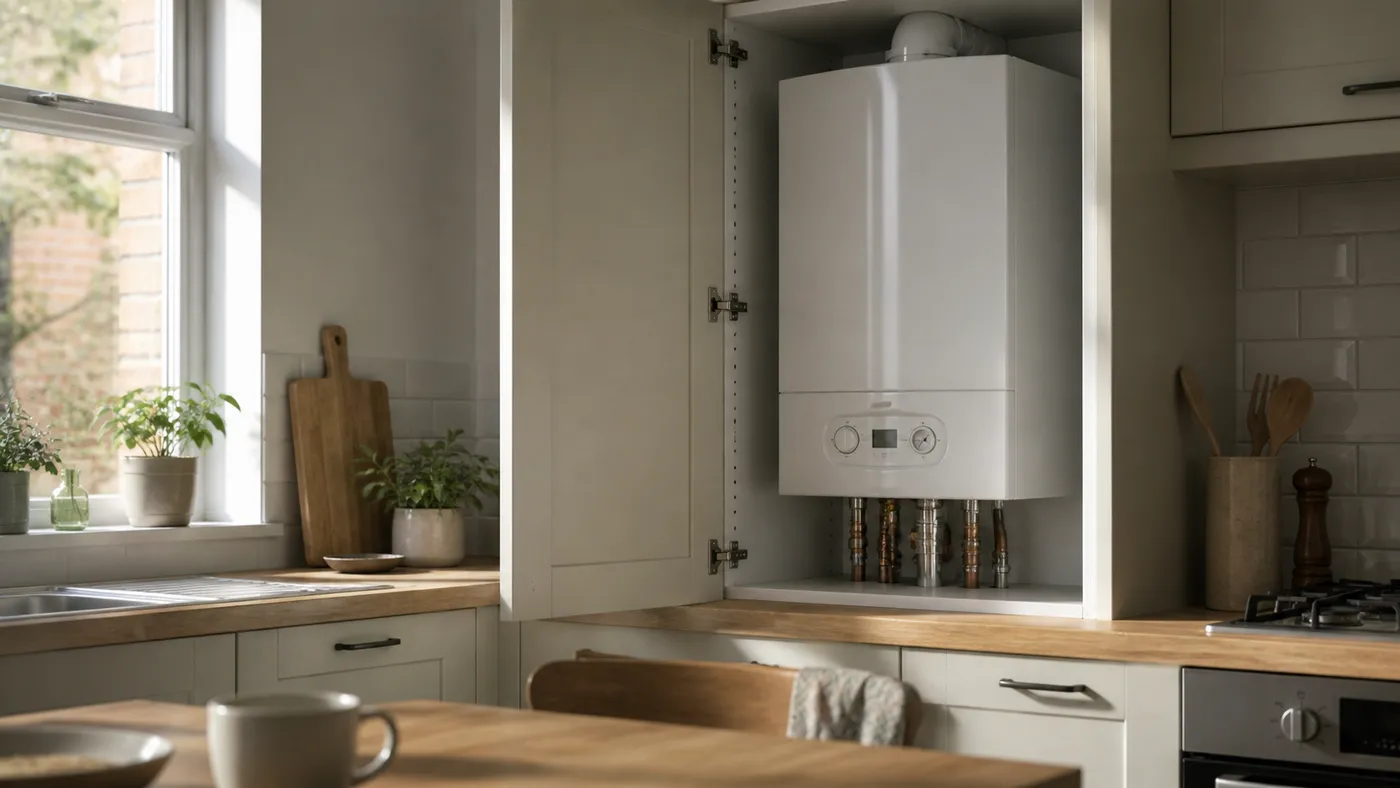
The meter rarely has to move when a boiler is replaced or relocated. When it does, it is a separate job arranged through your energy supplier, and it needs to happen first.
Usually not. When a boiler is replaced, or even moved to another room, the gas meter normally stays exactly where it is and new pipework is run from the meter to the boiler's new position. A meter move is a separate job, arranged through your energy supplier rather than by the boiler installer, and it is only needed in particular situations such as building work around the meter or a meter in an unsuitable spot.
Why the meter can usually stay where it is
The boiler connects to the pipework after the meter, and that pipework can be extended or rerouted to almost any suitable boiler position. The meter's location does not dictate where the boiler goes.
What does change is the length and route of the gas pipe. A longer run to a new boiler position may need a larger pipe to keep the pressure drop within limits, which is covered in does a new boiler need a bigger gas pipe. That is part of the boiler installation and is sized and fitted by the Gas Safe registered engineer doing the job.
When the gas meter does need to move
A meter move is usually driven by building work or by where the meter currently sits, not by the boiler itself.
- Kitchen or utility refits where the meter sits in the way of new units or a planned wall.
- Extensions built over or around the meter position, where it would end up enclosed or inaccessible.
- A meter inside a cupboard or under stairs that you want moved to an external meter box.
- A meter in a position that is hard to reach for reading or for turning off the emergency control valve.
If none of these apply, moving the meter adds cost and delay without improving the boiler installation.
Whatever its position, the meter and its emergency control valve must stay accessible. That rules out boxing the meter into new kitchen units with no access panel, or leaving it behind a new stud wall. If the only way to keep it accessible within the new layout is to move it, that is the time to apply.
Who moves a gas meter?
Contact your energy supplier. The meter belongs to the supplier's meter operator, and the pipe that feeds it belongs to the gas network, so both are outside what a boiler installer can alter.
In London the local gas networks are Cadent in the north and SGN in the south. If moving the meter also means moving the incoming service pipe, the network operator is involved, and they survey and quote separately. The boiler installer's responsibility starts at the outlet of the meter: once the meter is in its new position, they connect and size the pipework from there to the boiler.
How a meter move fits around a boiler installation
Get the meter move booked first. The boiler cannot be commissioned until there is a gas supply at the meter it will run from.
Lead times for meter and service pipe work are set by the supplier and the network, not by the installer, so they are worth asking about early. A sensible order is: survey for the boiler, confirm whether the meter really needs to move, apply for the move, then fix the installation date once the meter work is scheduled. If the boiler is moving as part of a larger project, moving your boiler during a kitchen renovation covers how to sequence the heating work around the builders.
What if your gas meter has been capped or removed?
A capped meter means the supply has been disconnected, and it has to be reinstated by the supplier or network before a new boiler can be fired.
This comes up in empty properties, after a long void period, and in some probate and renovation purchases. The boiler can be fitted while the supply is off, but it cannot be tested, commissioned or handed over until gas is back on at the meter. Tell the installer at the survey stage so the dates are planned around it. Where a property has been empty for a long time, the existing gas pipework should also be tested for tightness before the new boiler is connected, since pipework that has sat unused can hide a leak; that test is part of any competent installation. If you have just bought a property in this state, the first-time buyer's checklist for an inherited boiler covers the other checks worth doing.
Flats and shared meter cupboards
In a block of flats the meter is often in a communal cupboard or a riser, and moving it is unlikely to be possible without the building owner's agreement.
Leaseholders usually need the freeholder's or managing agent's consent for work affecting communal areas, and sometimes for the gas pipe route itself. Most flat boiler replacements leave the meter where it is and run pipework within the flat. Boiler replacement in a leasehold flat explains what consent to ask for.
Getting it checked before you commit
A survey will tell you whether your meter can stay put and what pipework the new boiler position needs.
Our new boiler installation survey looks at the meter position, the gas pipe route and size, and where the boiler and flue can go, and the fixed written quote states what is included. If a meter move is genuinely needed, you will be told plainly, along with who to contact. Book a free survey to find out.
Frequently asked questions
Can my boiler installer move the gas meter?
No. The meter belongs to your energy supplier's meter operator, so moving it is arranged through the supplier. The boiler installer handles the pipework from the meter outlet to the boiler.
Do I need to move the gas meter if I move my boiler?
Usually not. New pipework is run from the existing meter to the new boiler position, sized for the length of the run. The meter only needs to move if building work or its current location makes it necessary.
Can a new boiler be fitted if the gas meter is capped?
It can be fitted, but it cannot be commissioned or used until the gas supply is reinstated at the meter. Reinstatement is arranged through the energy supplier or the gas network, so book it before fixing the installation date.