Small Hot Water Cylinders: What Fits a Flat or Tight Cupboard?
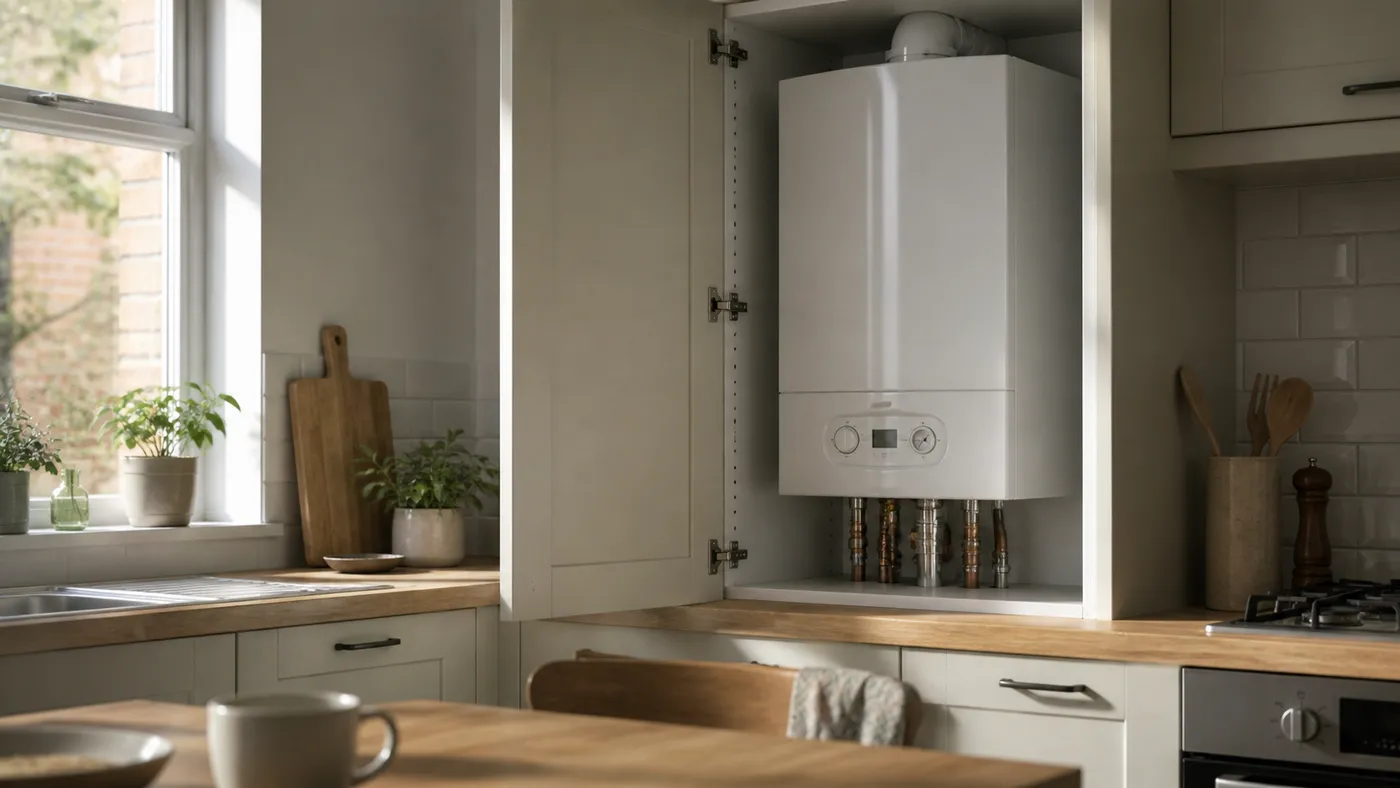
A small cylinder can keep stored hot water in a flat or a cramped airing cupboard. Here is what the compact, slimline and horizontal options are, what they need around them, and when to skip the cylinder altogether.
A small hot water cylinder is a sensible choice when you want stored hot water but only have a narrow cupboard, a low loft or a corner of a flat to put it in. Most cylinder ranges include compact models, slimline models that are taller and narrower, and horizontal models for eaves and lofts, in both vented and unvented versions. What limits you is rarely the cylinder itself. It is the hot water you use, the space the cylinder needs around it, and, for an unvented cylinder, the discharge pipe and mains supply.
What counts as a small hot water cylinder?
There is no official cut-off, but in practice a small cylinder is one below the usual family sizes. The old standard copper cylinder in many London airing cupboards is 900 x 450 mm and holds roughly 115 to 120 litres. Most unvented ranges start well below 100 litres, and small vented cylinders go lower still. A small cylinder suits a flat or a one-bathroom home with one or two people, where showers are the main use and baths are occasional.
Size in litres should come from how many people use hot water and how, not from the size of the cupboard. That calculation is in what size hot water cylinder do I need. This article is about the next question: once you know roughly what you need, which shape will fit.
The main small cylinder options
Each shape solves a different space problem.
- Compact standard cylinders. The same upright shape as a normal cylinder, just shorter. The simplest swap where the cupboard is the issue only in height.
- Slimline cylinders. A smaller diameter and a greater height for the same volume. Good for a narrow, tall cupboard, but check the ceiling height and the clearance needed above for pipework and valves.
- Horizontal cylinders. Designed to lie on their side, in a loft, an eaves void or above a kitchen ceiling. Horizontal versions exist for both vented and unvented systems. They need a strong, level platform and access for maintenance.
- Combination cylinders. A vented cylinder with its own cold water tank built on top. Useful in a flat with no loft, but the pressure at the taps is low because the tank sits only just above them.
- Direct electric cylinders. Heated by immersion elements rather than a boiler, often on a cheaper overnight tariff. Common in flats with no gas.
The full range of cylinder types, and how to tell what you have now, is in the different types of hot water cylinder.
What a small unvented cylinder needs around it
An unvented cylinder gives mains-pressure hot water, which is why most people want one, but the cylinder is only part of the space it takes. Before you measure the cupboard, allow for:
- The expansion vessel. Either built into the cylinder or a separate vessel mounted nearby. A separate one needs wall space in or next to the cupboard.
- The safety valves and pipework. The inlet control group, the temperature and pressure relief valve and the pipes to them all sit on or beside the cylinder and need access.
- A discharge route. The relief valves discharge through a tundish into a pipe that has to run to a safe, visible point outside or to a suitable drain, following set rules on length and fall. In a flat in the middle of a building, finding that route can decide whether an unvented cylinder is possible at all.
- Access for the annual check. The valves and vessel are checked regularly, so the cupboard cannot be sealed up tight around them.
- A decent mains supply. An unvented cylinder can only deliver the flow your mains provides. Weak mains flow means disappointing showers, however small or large the cylinder.
Unvented cylinders must be fitted by an engineer holding the G3 qualification, and if the cylinder is heated by a gas boiler, the gas work needs a Gas Safe registered engineer as well.
The trade-off with a small cylinder
Less stored water means it runs out sooner. The practical difference is the reheat time. A cylinder with a high-performance coil, heated by a boiler with enough output, can recover quickly between showers, so a small cylinder can feel larger than its litres suggest. One heated only by an immersion element takes much longer to recover, which matters if two people shower back to back in the evening.
A deep bath is the usual stress test. It can take most of a small cylinder in one go. If you run baths often, a small cylinder will frustrate you.
If a heat pump is on your list for the next few years, bear in mind that heat pumps need a cylinder with a much larger coil and often more volume. A small boiler cylinder will not suit one later.
When a small cylinder is the wrong answer
If you have a gas supply, a good mains flow and a home where only one hot tap or shower is in use at a time, a combi boiler may do the job better and give you the cupboard back entirely. That is often the case in one- and two-bedroom London flats. If you have two bathrooms that are used at the same time, a small cylinder is usually too small, and the honest answer is a correctly sized cylinder in a better location. If the only obstacle is the cylinder's position, moving it can be simpler than squeezing a small one into the wrong space. For flats with no gas, the choice is covered in combi boiler vs electric boiler for London flats.
Getting the right small cylinder fitted
The right choice depends on measurements taken at the property: the cupboard or loft space, the mains flow rate, the discharge route and how you use hot water. Our hot water cylinder replacement survey checks all of them, tells you plainly if a combi or a larger cylinder elsewhere would serve you better, and gives you a fixed written quote.
Frequently asked questions
What is the smallest unvented cylinder I can get?
Most manufacturers make unvented cylinders well under 100 litres, including slimline and horizontal versions. The practical limit is usually not the cylinder but the space for its expansion vessel, valves and discharge pipe, and whether the stored volume is enough for how you use hot water.
Can a hot water cylinder be fitted horizontally?
Only if it is designed to be. Horizontal cylinders are made for lofts, eaves and ceiling voids and are available in vented and unvented versions. A standard upright cylinder should not be laid on its side, because its coil, connections and safety valves are designed for vertical use.
Is a small cylinder or a combi better for a flat?
If there is gas, a good mains flow and only one shower in use at a time, a combi usually wins because it frees the cupboard and never runs out. A small cylinder suits flats with weak mains flow, no gas, or where you want backup hot water from an immersion heater.